Structured Interviews: Benefits and Best Practices
In today’s competitive hiring landscape, organizations are seeking not just qualified candidates but the most equitable and efficient way to evaluate them. That’s why structured interviews are gaining popularity—they establish a systematic framework to assess each candidate, reducing bias and supporting fairer hiring decisions. By focusing on the benefits of structured interviews, employers can cultivate a more objective and reliable hiring process that leads to stronger, more diverse teams.
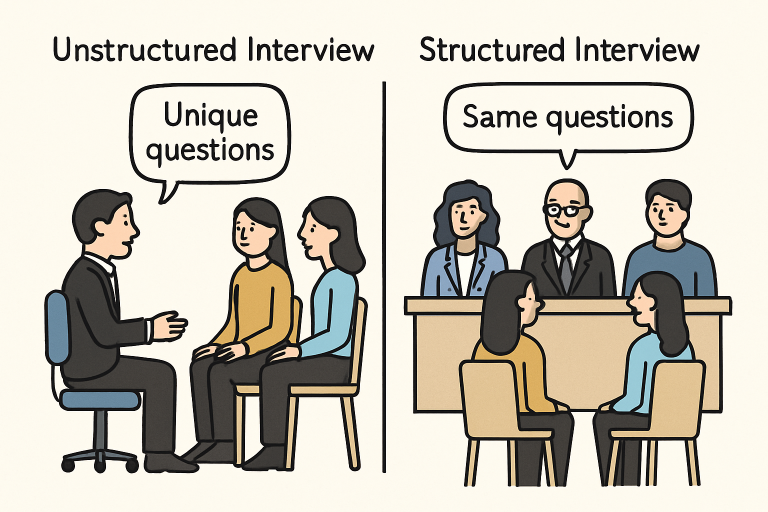
Structured interviews rely on asking each candidate the same predetermined set of questions, allowing for direct comparison and minimizing the subjectivity that can skew outcomes. The growing adoption of this approach stems not only from its capacity to improve predictive accuracy but also from its alignment with anti-discrimination and equal opportunity employment standards. For organizations aiming to build robust talent pipelines, establishing a foundation of consistency in their interview process is essential for both quality and compliance.
Moving away from informal or improvised conversations, structured interviews enable hiring teams to focus on job-relevant skills rather than unconscious preferences or first impressions. As industries continue to recognize the importance of inclusivity, systematic interviewing methods serve as a strategic lever for advancing workplace diversity, equity, and inclusion.
While traditional interviews can help uncover certain interpersonal qualities, overreliance on unstructured dialogue can result in overlooked skills and unintentional bias. Rather than leaving hiring decisions to chance, companies can adopt a structured process to ensure every candidate is given equal footing, promoting transparency and mutual respect from the outset.
What Are Structured Interviews?
Structured interviews are a defined method for evaluating candidates by asking every applicant the same set of questions in the same sequence. This format provides consistency, making it easier for interviewers to assess responses against predetermined criteria. Unlike their unstructured counterparts, which can drift into off-topic discussions or be swayed by personality and small talk, structured interviews keep questions anchored to the specific competencies, skills, and qualifications required for the role.
A typical structured interview includes carefully crafted behavioral and situational questions. Behavioral questions prompt candidates to draw on past experiences, while situational questions pose hypothetical scenarios to gauge problem-solving abilities and predict future performance. The ultimate goal is to ensure that selection decisions are based on objective, job-related data rather than intuition or tradition.
Key Benefits of Structured Interviews
Enhanced Objectivity and Fairness
By standardizing questions and evaluation measures, structured interviews help eliminate many forms of unconscious bias that can infiltrate the traditional hiring process. Objectivity is enhanced, as every candidate is evaluated based on the same criteria. This boosts organizational confidence in the fairness of selection outcomes and helps foster a diverse workforce. Primary research, including coverage from SHRM, highlights that structured interview formats significantly reduce gender and racial bias in hiring.
Improved Predictive Validity
Compared to casual interviews, structured approaches offer stronger predictive validity—meaning the ability to forecast job performance based on interview results is much higher. By systematically focusing on relevant skills and past actions, employers can make more dependable hiring choices and decrease employee turnover, a benefit underscored by workforce experts at ERE.
Legal Compliance
Regulatory frameworks in many jurisdictions require employers to demonstrate that their hiring practices are fair and merit-based. Structured interviews provide concrete documentation showing that questions are tied to essential job criteria, which can help protect organizations from litigation or regulatory scrutiny. Consistency in questioning and scoring supports compliance with equal opportunity laws and bolsters an employer’s reputation for fairness.
Best Practices for Conducting Structured Interviews
Develop a Comprehensive Question Bank
Establishing a robust set of interview questions begins with a thorough analysis of the job description and the essential competencies required for the role. Integrate both behavioral and situational items to reveal not just what a candidate has done, but how they might act in similar future scenarios. Input from team members and existing high performers can help shape questions that are relevant and predictive.
Utilize a Consistent Rating Scale
Scoring candidate responses should be more than a gut instinct—use a clearly defined rating scale, such as a one-to-five or one-to-ten system, tied to specific examples of what constitutes a strong or weak response to each question. Consistently applying this scale makes it easier to compare candidates fairly and summarize results for hiring managers or committees.
Involve a Diverse Interview Panel
Including interviewers from different backgrounds provides a broader perspective during candidate evaluation and helps combat individual biases. Diverse panels can improve the richness of candidate assessments—ensuring that evaluation is not solely based on one person’s viewpoint, making the process both more balanced and defensible.
Provide Interviewer Training
Proper training in structured interview techniques is crucial. Interviewers must be familiar with the question set, understand the rating system, and be aware of legal requirements. Training programs create alignment among interviewers, promoting consistency and raising the overall quality of the interview process.
See also: Six Real Reasons Mobile TV Stands Beat Fixed Wall Mounting Every Time
Combine with Other Assessment Methods
While structured interviews dramatically enhance reliability, they are most effective when used in conjunction with other selection tools, such as work samples or technical assessments. This holistic approach encompasses both the measurable skills and the more intangible attributes necessary for success in the role.
Challenges and Considerations
Transitioning to structured interviews involves preparation, including developing question banks, selecting rating systems, coordinating interview panels, and allocating time for training. While structured formats enhance fairness, they may sometimes limit the exploration of candidate personality or adaptability—not every valuable trait fits neatly into a prescribed question. The key is to blend structured interviews as the backbone of evaluation while leaving room for additional insights through reference checks, skills tests, or follow-up interviews.
Being aware of these limitations and responding by diversifying assessment tools will help organizations fully benefit from structured interviewing without missing valuable candidate qualities that are harder to quantify. Continuous feedback and adaptation can further tune the process over time.
Conclusion
Structured interviews represent a proven best practice for objective, compliant, and fair talent selection. Organizations that implement these methods develop more dependable hiring strategies, foster diverse teams, and mitigate legal risks. By adhering to structured interview frameworks and continually improving them, employers can make more informed, equitable hiring decisions, ultimately benefiting both the organization and its future employees.